Leadership
Blog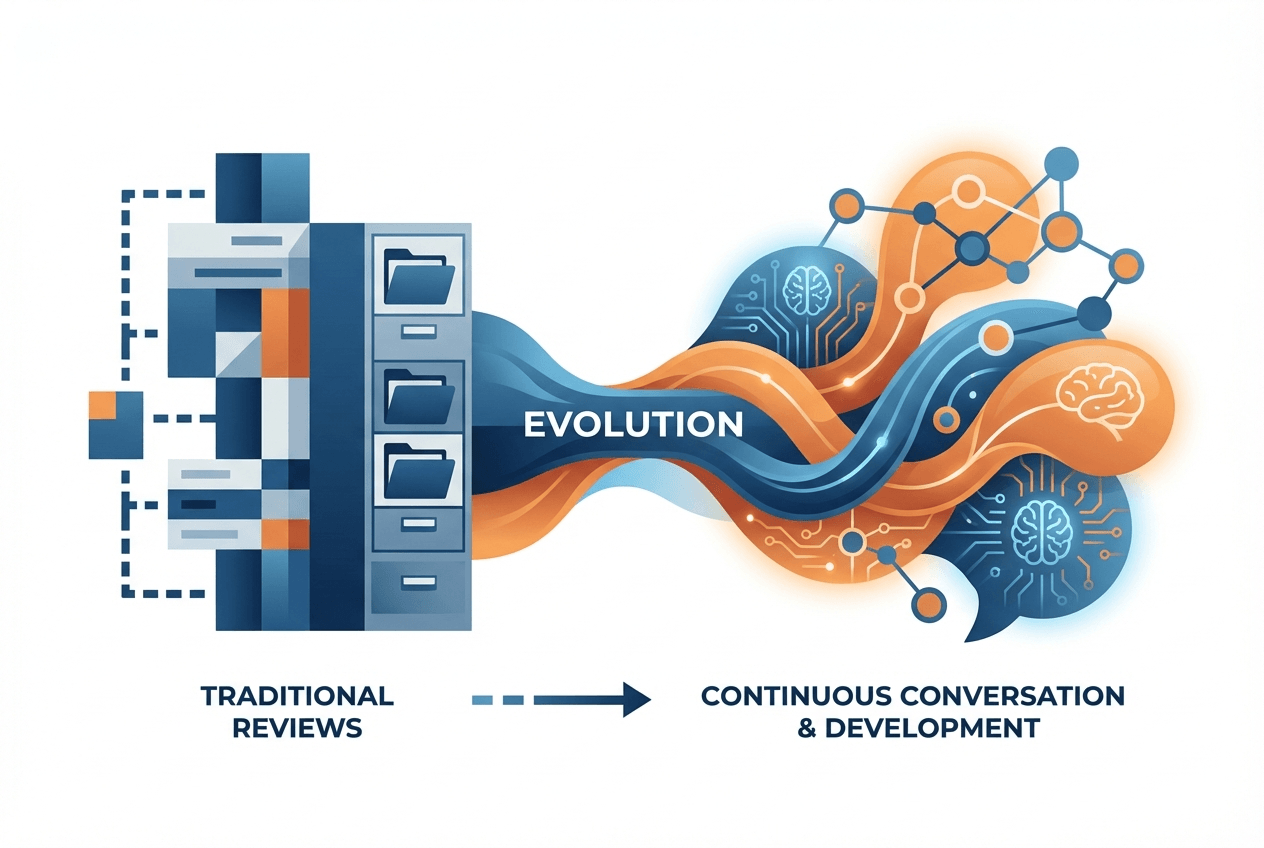
By 2026, the mandate for Human Resources leaders has shifted seismically. The era of "managing" performance through retrospective grading is ending. In its place, a new imperative is emerging: enabling growth through continuous, high-quality signal.
According to Gartner's latest research on top priorities for HR leaders, CHROs are now focused on four critical areas that will define successful organizations:
- Realizing AI Value: Moving beyond experimentation to tangible workforce impact
- Workforce Redesign: Adapting structures for the human-machine era
- Mobilizing Leaders: Equipping leadership to drive growth amidst uncertainty
- Transforming Culture: Embedding culture as a strategic asset, not just a vibe
These priorities share a common thread: they all require a workforce that is agile, self-aware, and psychologically safe enough to learn rapidly. Yet most organizations are still using feedback mechanisms designed for an entirely different era—one where the primary goal was evaluation, not development.
The Fundamental Flaw in Traditional Performance Management
For decades, the 360-degree review has served as a weapon of evaluation rather than a tool for growth. Organizations have used these assessments to rank employees, justify compensation decisions, and populate forced-distribution curves. This approach fundamentally undermines the psychological safety required for honest feedback.
Consider what happens in a typical performance review cycle. Employees know their feedback will be read by managers and HR. They understand that their words might influence someone's promotion, bonus, or even job security. Under these conditions, what kind of feedback do you think people provide?
The answer is predictable: sanitized, politically safe commentary that protects relationships and avoids controversy. Nobody wants to be the person who "tanked" a colleague's review. The result is feedback that's technically positive but operationally useless—the equivalent of being told you're "doing great" when you desperately need to know what to improve.
Organizational psychologist Adam Grant has long argued that "Psychological safety is not about withholding criticism. It's about enabling people to speak up without fear." When feedback is tied directly to evaluation, fear dominates. People hide mistakes, withhold ideas, and offer "safe" feedback rather than the truth.
To align with the 2026 agenda, HR leaders must decouple development from evaluation. The goal of a modern assessment strategy shouldn't be to populate a 9-box grid or justify a bell curve distribution. It should be to provide the high-fidelity signal employees need to grow.
Why Traditional 360 Reviews Fail the Development Test
If the purpose is growth, the process must support it. Traditional 360-degree reviews—those lengthy, text-based surveys we've all suffered through—fail this test on multiple levels.
They're low-fidelity. Checkboxes and 1-5 scales miss the nuance of human interaction. When you rate someone's "communication skills" as a 3 out of 5, what does that actually mean? Is it their presentation style? Their email tone? The way they handle difficult conversations? The format strips away context, leaving managers with data points but no real understanding.
They're systematically biased. Text feedback is often sanitized or politically charged. People either write nothing (to avoid controversy) or everything (to settle scores). Recency bias dominates—most feedback reflects the last few weeks rather than the entire review period. And because feedback isn't anonymous in practice (writing styles are distinctive), people self-censor constantly.
They're exhausting for everyone involved. Survey fatigue is real. Studies consistently show 30-40% incompletion rates for traditional 360 assessments. When you ask busy professionals to write thoughtful paragraphs about five colleagues, you're competing with a hundred other priorities. The result? Rushed, low-quality responses that help no one.
They create perverse incentives. When everyone knows the system is tied to compensation, people game it. High performers receive inflated praise to ensure they're "taken care of." Struggling employees get vague feedback that avoids documentation. The entire exercise becomes a political negotiation rather than a developmental conversation.
In the human-machine era, we have better tools. The most effective feedback comes from conversation, not form-filling. Voice captures tone, hesitation, and emphasis—the "data between the lines" that text misses entirely.
The Emerging Model: Continuous Development Through Conversational AI
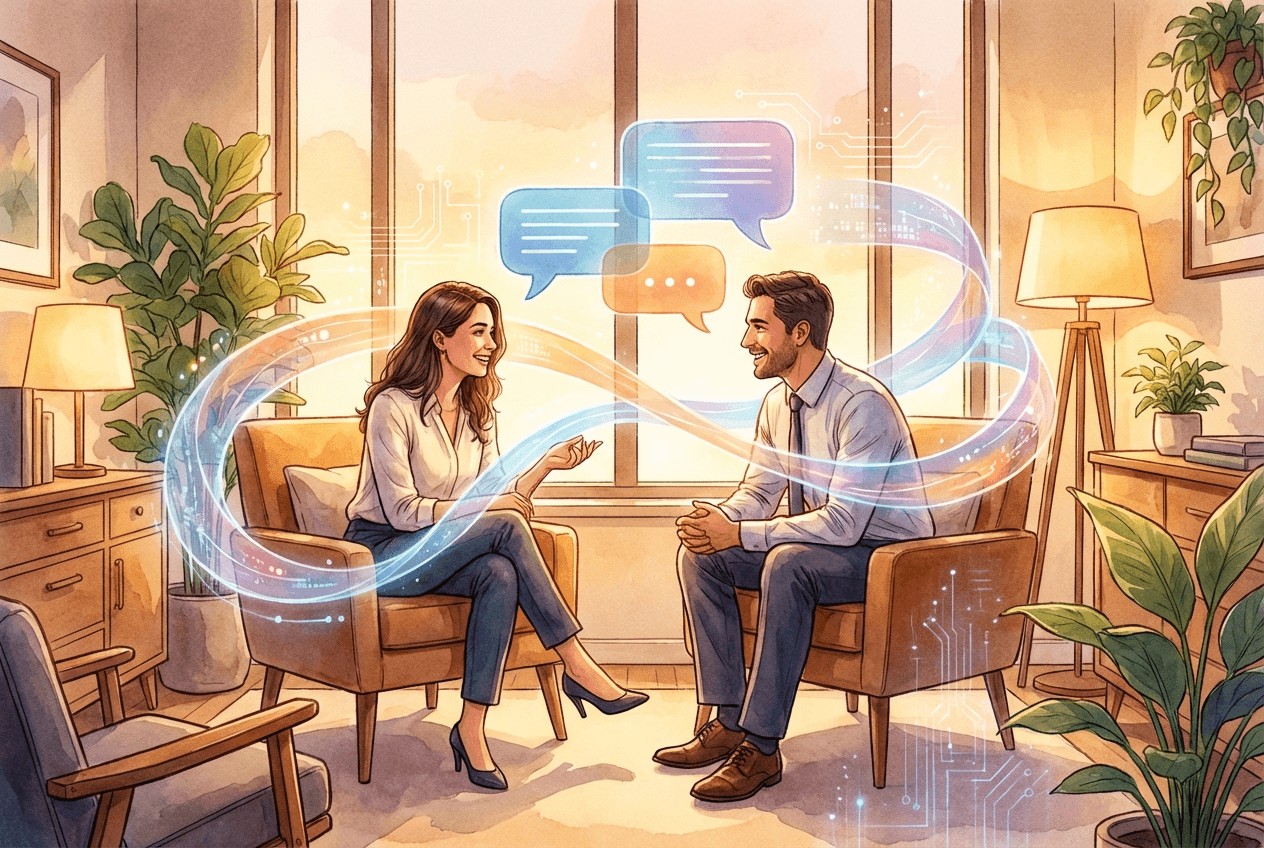
Forward-thinking CHROs are pioneering a different approach. Instead of annual evaluation rituals, they're building systems for continuous development. Instead of text-based surveys, they're leveraging conversational AI to capture the richness of human insight.
This isn't about replacing human judgment with algorithms. It's about using technology to enhance the human element of feedback. The best implementations combine three critical components:
Guaranteed anonymity that builds trust. When employees know their feedback is truly confidential—that it will be aggregated and anonymized before anyone sees it—they speak differently. They share the truth. They point out blind spots. They offer the kind of specific, actionable insight that actually drives improvement.
One VP of People at a fast-growing tech company described the shift: "We used to get feedback like 'Sarah is great to work with.' Now we hear 'Sarah's technical presentations are excellent, but in one-on-ones, she sometimes jumps to solutions before fully understanding the problem.' That's the difference between a compliment and a development opportunity."
AI that acts as an expert interviewer. The most sophisticated systems don't just collect responses—they conduct conversations. When someone gives a vague answer, the AI probes deeper. "Can you give me a specific example of that?" "What would you like to see them do differently?" "How does this impact the team's work?"
This is where AI truly adds value. A static form can't adapt to responses. It can't ask follow-up questions. It can't guide someone toward more useful feedback. But conversational AI can play the role of a skilled coach, drawing out insights that people didn't even know they had.
Accessibility that democratizes coaching-quality feedback. Executive coaching has traditionally been reserved for senior leaders due to cost—typically $10,000 or more per engagement. The right technology can deliver that same depth of insight to every employee in an organization.
Imagine giving every team member the equivalent of an executive coach who interviews their colleagues, identifies patterns, and delivers personalized insights for growth. That's the promise of voice-first development platforms. They scale the unscalable, making high-quality feedback accessible regardless of level or location.
What CHROs Should Look for in Development Partners
As you evaluate solutions for your 2026 talent strategy, ask three critical questions:
Does it build genuine psychological safety? Look beyond promises of anonymity. How does the platform technically guarantee it? Can managers or HR access individual responses? If there's any possibility of surveillance or attribution, employees will self-censor, and you'll get useless data.
Is the AI truly additive? Many tools claim to use AI but simply apply natural language processing to summarize text responses. That's not additive—that's efficiency. Real value comes from AI that actively participates in the feedback process, asking better questions than a static form ever could.
Does it respect people's time? If your feedback process takes 30 minutes per person to complete, compliance will be abysmal. The best solutions recognize that voice is faster and richer than text. A five-minute spoken conversation can yield more insight than a 20-minute written survey.
Making the Shift: Practical Steps for HR Leaders
Transitioning from evaluation to development isn't just a technology change—it's a cultural shift. Here's how to make it happen:
Start by separating feedback from compensation decisions. Make it explicit that developmental feedback will not influence this year's ratings or bonuses. Yes, this means running parallel processes for a while. That's okay. The investment in trust pays dividends.
Pilot with teams that are already psychologically safe. Don't start with your most dysfunctional group. Begin where trust already exists, prove the model works, then expand. Early wins build momentum.
Train managers to receive feedback, not just give it. The hardest part of continuous development is helping leaders become comfortable with ongoing input. Invest in coaching for your management layer first.
Measure what matters. Track whether people are actually changing behaviors based on feedback. Monitor whether teams report feeling more supported in their development. Don't just count survey completion rates.
The Future of Work Requires the Future of Feedback
The 2026 HR leader isn't just an administrator managing processes. They're the architect of the organization's collective intelligence, building systems that help every employee grow faster than the market evolves.
This requires moving beyond the inherited assumptions of industrial-era performance management. It means recognizing that the same tools that worked for ranking factory workers don't serve knowledge workers in a world where adaptability matters more than consistency.
By shifting focus from evaluation to development, and leveraging AI to capture the richness of human conversation, we can build cultures where feedback is a gift, not a weapon. Where people actively seek input because they trust it will help them grow. Where continuous improvement isn't a corporate slogan but a lived reality.
The organizations that make this shift won't just have better engagement scores. They'll have a genuine competitive advantage: a workforce that learns faster, adapts more readily, and builds the collective capability needed to thrive in an uncertain future.
For CHROs ready to lead this transformation, the technology exists today to make it real. Platforms like Your360.ai are pioneering voice-first development. Here is how it works:
- Self Discovery Call: Start with a private chat with AI Coach Tam. Through guided questions and active listening, Tam helps you uncover blind spots and define your goals.
- Smart Scheduling and Interactions: Tam connects with your chosen colleagues and confidentially interviews them —no awkward surveys, just real conversations.
- Insights and Growth Plan: Get personalized insights and action steps, delivered just to you. Tam walks you through it so real feedback turns into actionable insights and next steps.
They're turning the "feedback tax"—that dreaded annual ritual everyone endures—into a growth engine that actually accelerates performance.
The question isn't whether this shift will happen. It's whether your organization will lead it or follow it. The 2026 agenda is already here. The only question is whether you're ready.